Nigeria Super Eagles World Cup Failure Nigeria Super Eagles World Cup Failure
Nigeria had one of its strongest squads in decades. It still missed the 2026 World Cup. Here is what broke, and why it keeps breaking.
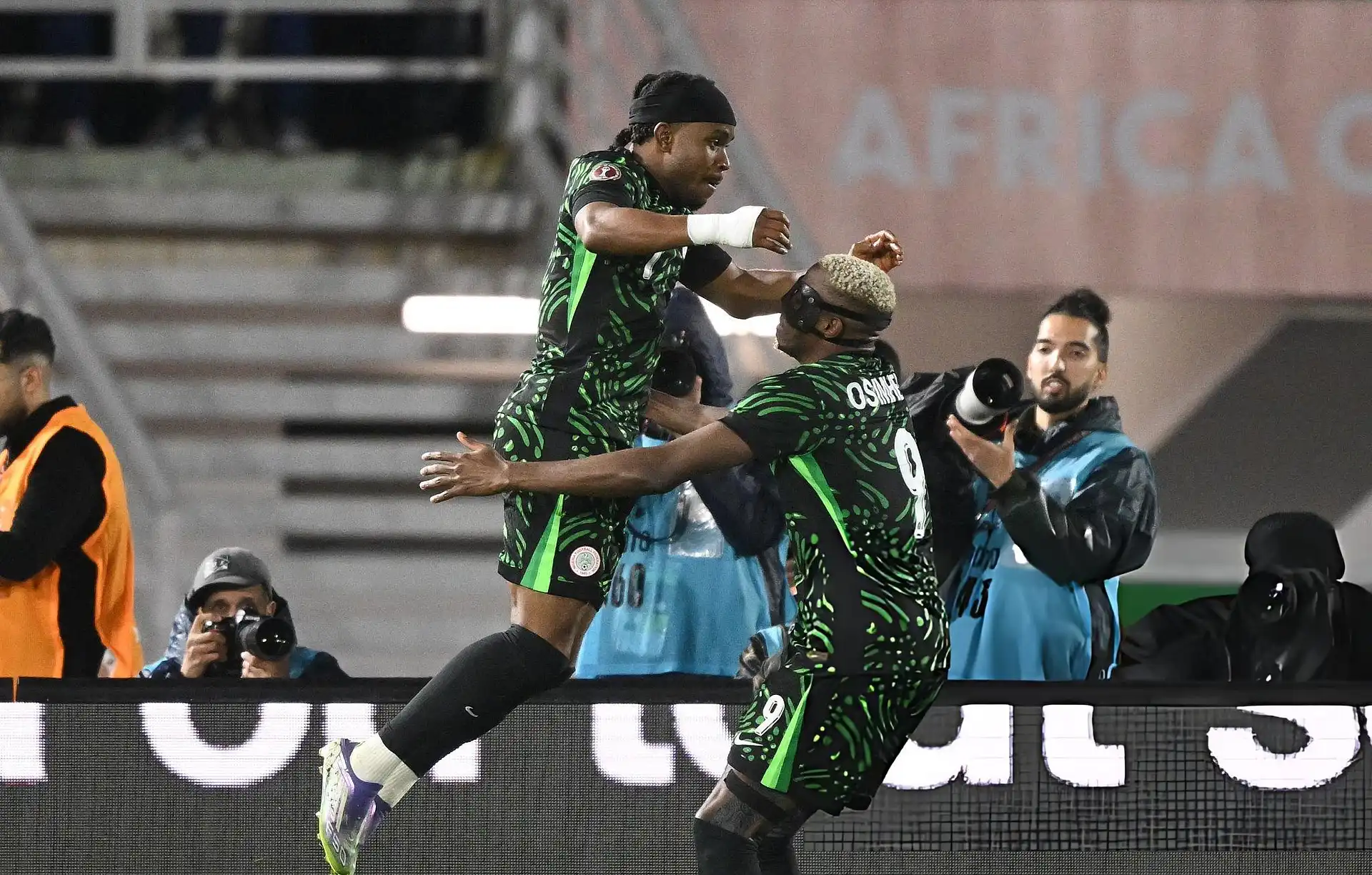
Victor Osimhen scored 31 goals in 46 appearances for Nigeria. He is the second-highest scorer in the country’s history. He was not enough.
On November 16, 2025, in Rabat, Nigeria lost to DR Congo on penalties. The final shootout score was 4‑3. The Super Eagles missed a second consecutive World Cup. Per ESPN’s match report that night, Nigeria “were run ragged by the more fluid Congolese” from the moment their 1‑0 lead vanished. Osimhen had left the pitch at half time with an injury.
The team that lost that night was not weak. That is the part that is hard to sit with.
Ademola Lookman won the 2024 CAF Player of the Year award. He scored a hat-trick in the UEFA Europa League final for Atalanta. Per Premium Times in January 2026, he was the highest-rated player at AFCON 2025 by WhoScored, ahead of Mohamed Salah and Riyad Mahrez. Osimhen, playing for Galatasaray, scored a Champions League hat-trick against Ajax in the 2025‑26 season, per Pulse Sports Nigeria in April 2026.
Behind them: Wilfred Ndidi, Alex Iwobi, Samuel Chukwueze, Semi Ajayi, and Stanley Nwabali, who saved two penalties from Salah and Omar Marmoush at AFCON. Per Al Jazeera in January 2026, Nwabali kept Nigeria alive multiple times in that tournament. The same squad that could not qualify for the World Cup scored 14 goals in 5 AFCON games and reached the semi-final before losing to hosts Morocco on penalties.
The talent was there. Something else kept breaking.
One qualifying cycle produced three head coaches. Jose Peseiro came first. He was reportedly owed months of salary and bonuses, per ESPN’s November 2025 analysis. Finidi George replaced him. Per FootballInNigeria.com.ng in April 2026, Finidi had no previous head coaching experience at senior international level when he took the job. Eric Chelle came third. After the DR Congo defeat, Chelle reportedly attributed the loss to “Congolese voodoo,” per multiple Nigerian outlets in November 2025. That was the coherence available to the team.
Former Nigeria midfielder John Ogu, speaking on the Home Turf podcast in April 2026, made a careful point. Three coaching changes in one campaign is an administration failure. But not winning enough games with this quality of player is also a player failure. “Both things can be true simultaneously,” he said. He is right. Players at this level need continuity, tactical clarity, and trust. Nigeria provided none of those things.
The coaching chaos was only part of it. President Tinubu approved funds in January 2024 to clear all debts owed to national teams. Per The Nation Nigeria in November 2025, players were still owed money going back to 2019. The NFF’s Sports Commission Director General said bonuses had been paid immediately after the March qualifying matches, before players had even showered. Per Daily Trust in November 2025, a player training boycott over unpaid allowances happened later that year.
A House of Representatives committee investigated how the NFF handled $25 million in FIFA and CAF grants. A facility built under the FIFA Forward Programme was found to be substandard on physical inspection, per The Nation Nigeria. Only two stadiums in the entire country, in Uyo and Abeokuta, are currently cleared by CAF to host matches. Per a Premium Times analysis in April 2026 by Victor Agozirim Ukpai and Boluwatife Daniel-Adebayo, Nigerian football has “become less about development and more about survival of egos, survival of interests, and survival of those who see the game not as a passion but as a profit centre.”
This is not new. It is a pattern with a history.
The 1994 World Cup squad and the 1996 Olympic gold medal squad, 44 players across both rosters, contained one player born outside Nigeria. Per Premium Times in April 2026, that was Efan Ekoku. Rashidi Yekini, Jay-Jay Okocha, Nwankwo Kanu, Sunday Oliseh. All of them came through the Principals Cup and then the NPFL before moving to Europe. They were products of a domestic system that prepared them before it exported them.
Today the NFF is recruiting players born in England who previously chose England. Lookman rejected Nigeria’s approach three times between 2017 and 2018 before switching allegiance in 2020, per Wikipedia. Nigerian scouts were also tracking Arsenal’s Bukayo Saka and Eberechi Eze, per AllNigeriaSoccer in May 2026. Former Super Eagles winger Tijani Babangida told Premium Times that the “quality of Nigeria’s domestic league has dropped over the years.” The NPFL champion’s annual prize money is roughly what a mid-table Premier League squad player earns in two weeks.
The pipeline that produced the 1994 generation has not been rebuilt. It has been replaced by diaspora scouting. That is not a strategy.
The 2026 World Cup has 48 teams. Africa received 9 automatic qualification slots, three more than when Nigeria qualified comfortably in 2018. A bigger tournament. More African places. A lower bar. Nigeria still missed it. They could not win enough games in a group that included Lesotho, Zimbabwe, Rwanda, and South Africa.
Former Super Eagles captain Mikel Obi, on The Obi One Podcast in November 2025, did not soften it. He said the NFF had “deprived the common Nigerian the chance to watch our team on the biggest stage” for eight years. He called it “a disaster.” Haiti and Curaçao qualified for 2026. Per Premium Times in December 2025, they did it “through steady coaching, clear football direction, sustained diaspora engagement and stable youth pathways.” Smaller populations. Fewer resources.
Nigeria has missed four of the last six World Cups. Only 2014 and 2018 broke that run. The absences cluster in the periods when domestic football was weakest and NFF administration most chaotic. That is not a coincidence.
Former Super Eagles midfielder Etim Esin told Brila in April 2026 that the NFF needs a long-term plan for the next four years. He named Michael Emenalo, who built Chelsea’s scouting model and recruited Kevin De Bruyne, Mohamed Salah, and N’Golo Kanté, as the kind of football mind Nigeria needs. Not administrators protecting positions.
The NFF apologised after the DR Congo defeat. Per Premium Times in December 2025, the federation promised to “evaluate the technical, administrative, and structural gaps” and to “rebuild trust.”
Many Nigerians have heard this language before.